


The (Invisible) Art of Documenting Art
The (Invisible) Art of Documenting Art
Cristina Garrido
Regular price
€39,00 EUR
Regular price
Sale price
€39,00 EUR
Unit price
per
Taxes included.
Shipping calculated at checkout.
📦 Check shipping zones + rates for this product
📦 Check shipping zones + rates for this product
Spain and Portugal: Free shipping — Europe: €10 — Rest of the World: €20
Bilingual edition: Spanish-English
225 x 305 mm
Graphic design: Setanta
Limited edition
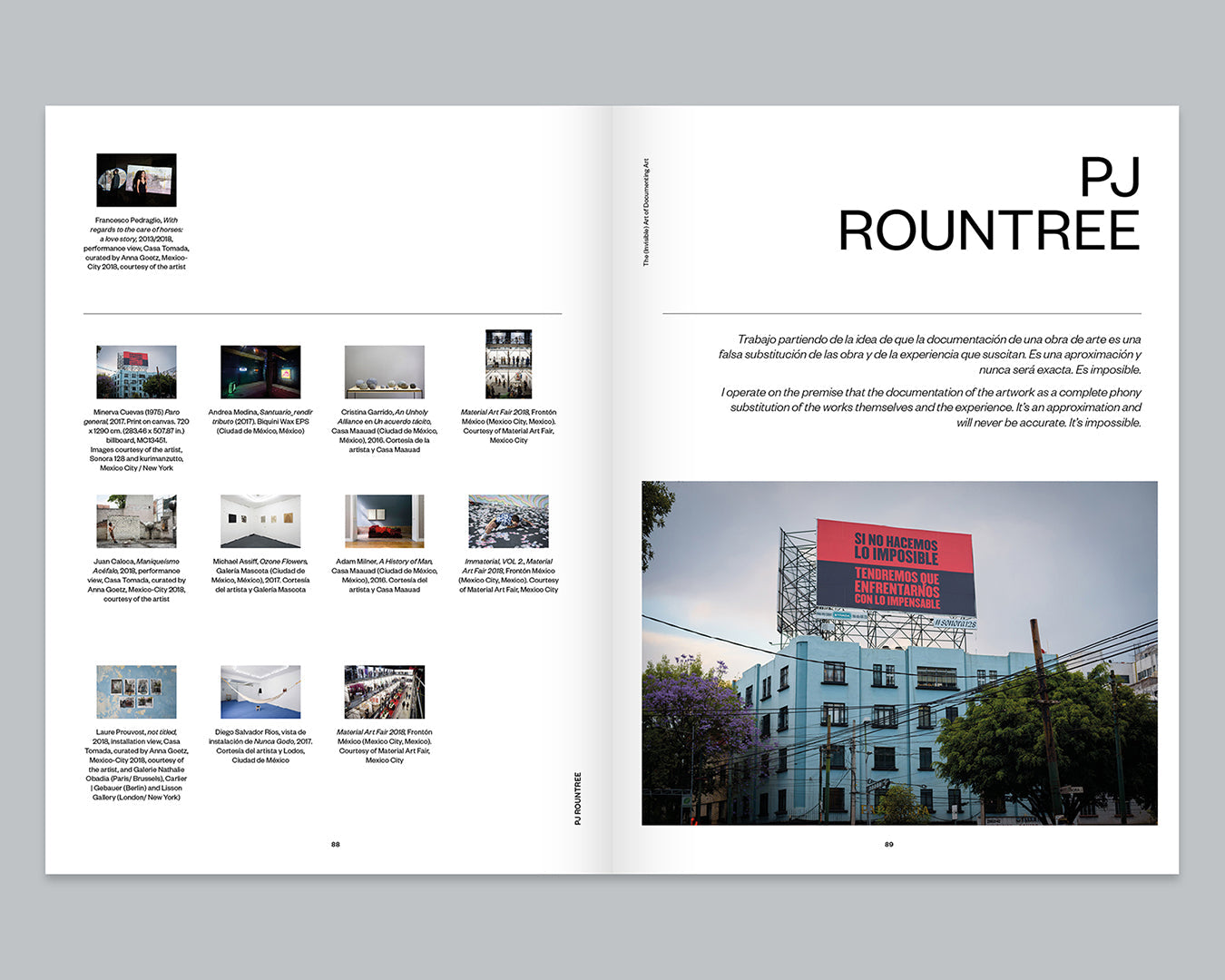
We are screen art spectators. Virtual consumers of contemporary art. Visitors to museums, galleries, biennials, and art fairs without having to move from where we are, thanks to professionals who portray artworks, exhibitions, installations, performances, and even sound art. Their ways of looking produce images that synthesize and transform the artworks, opening doors to curiosity.
Who are these photographers? How is the process they follow when creating images? How do they manage to stand out in the era of smartphones and platforms of compulsive consumption of images? Why in the art system, specially concerned about authorship, they are so unnoticed that one needs a magnifying glass to find their name in the credits?
Visual artist Cristina Garrido went to meet eight of them (Roberto Ruiz, Peter Cox, Moritz Bernoully, Carlos Díaz Corona, PJ Rountree, Erika Barahona Ede, Ela Bialkowska y Andrea Rossetti). This is the story –or at least one of the stories– of art’s B-side: the (invisible) figure of the photographer who documents contemporary art.


—
💛 By visiting Caniche’s website, you’re supporting an independent publisher directly and contributing to a wider network of artists, readers and small presses beyond traditional channels.
This product is designed and sold by — Caniche
Country — Spain
Shipping information —
About —